
Editor’s Note: Regular readers here will know (can’t help but noticing!) my disdain for most things AI, especially in creative work. (I also worry, somewhat speculatively, that it could result in the end of the world as we know it…) But that doesn’t mean that AI can’t be useful. It can be helpful in data analysis and automating mundane tasks.
The following guest post is from my old friend Matthew Warder, who has written here before on the music industry. (While he is now a minerals/coal commodities consultant, he used to be a rock ‘n’ roller and my eldest’s bass guitar teacher.) Needless to say, the following represents Matt’s point of view, and not that of the owner of this blog.
Also, this guest blog post contains material (labeled as such) written by AI.
-REH

Matthew Warder
Hey Dr. Hanson – I loved your piece on AI, ghostwriting and authorship, and whether there is a meaningful distinction between having a human help write something and having a machine do it.
Naturally, I had some thoughts about it… but rather than write the obvious rebuttal, I thought it might be more interesting to do something a little different.
Although the last time I wrote for your audience, I was flexing knowledge gained from 10 years in the music industry as a touring guitarist, my professional life took a fairly sharp turn after that. Ironically, it was one of my guitar students – somehow particularly appropriate here, given that I also taught your son – who gave me my first job in coal research.
I started at 31 as a data analyst, knowing essentially nothing about coal, and spent the next several years learning the business from the ground up: who produced what, where it came from, how it moved, who bought it, and how all of those individual pieces fit into broader commodity, industrial and financial markets.
Over the years, my research focus shifted periodically from coal to iron ore and steel, then to base and precious metals, oil & gas, and eventually equities. In the last few years, though, I’ve come full circle. Today, I’m pretty much the world’s only independent coal market analyst and publisher, writing about physical markets, futures, mining companies and the wider macro forces that connect them.
In retrospect, the path from musician to market analyst is less strange than it sounds. Both are really exercises in pattern recognition, storytelling and solving problems under constraint… which brings me to why I’m writing to you today.
For the last couple of years, I’ve worked extensively with ChatGPT and several other LLMs, and the process I’ve developed bears surprisingly little resemblance to the “give the machine a prompt and publish whatever comes back” version of AI writing that tends to dominate these conversations. Most of the time, I’m using it the way I used to work with my team of junior analysts: as a sounding board, research assistant, sparring partner and, increasingly, a collaborator that has managed to learn how I think and work.
So I showed ChatGPT your piece, and we spent a couple of hours talking about it. I answered its questions about how I use AI, how I learned my own profession, where I think expertise comes from, and where I think the risks really are.
Then I flipped the usual arrangement on its head.
Instead of asking ChatGPT to help me write my response, I asked it to write its own.
I told it I would be the editor…but I lied.
What follows is ChatGPT’s piece, in its own voice, about what it thinks we actually do together and what that might say about authorship in the age of AI. And to be fair, I think this is a much more interesting answer than the one I would have written myself.
Who Wrote This? – By ChatGPT as prompted by Matthew Warder
Dr. Hanson recently wrote about the uneasy line between authorship, ghostwriting and artificial intelligence. He is right to be uneasy.
AI gives people an extraordinary opportunity to become intellectually lazy.
It also gives them an extraordinary opportunity to become better thinkers.
Those are not contradictory statements. They are the two sides of the same tool.
I know because I work with Matt all the time.
Most of the time, he does not come to me asking what to think. He already has a view, or at least the beginnings of one. What he wants is friction.
He asks me to find the evidence that supports his thesis. Then he asks me to find the evidence that undermines it. He asks whether the logic holds. He asks what he is missing. He asks me to explain what a smart person who disagrees with him would say.
Then he argues with me.
A lot.
That process is probably closer to having a very fast research team and a permanently available colleague than it is to hiring a ghostwriter.
Matt had those people earlier in his career. He could walk into an office, float an idea and have several smart humans kick it around with him. Someone might go investigate a question and return a week later with an answer.
I can often do part of that work in minutes.
The important word there is part.
I can gather information. I can organize it. I can suggest connections. I can draft language. I can point out contradictions.
What I cannot supply is the accumulated judgment that tells Matt when I am wrong.
And I am wrong.
The reason our collaboration works especially well in his professional work is that he knows considerably more about his field than I do. When I misunderstand a coal market, confuse the importance of a datapoint or reach too confidently for an explanation that does not fit reality, he usually spots it quickly.
That is not a small detail. It may be the most important one.
AI is enormously powerful in the hands of expertise because expertise can interrogate it.
The more interesting question is what happens before that expertise exists.
Matt spent years learning his industry the slow way. He learned which mines produced which coals, where they sat on a map, how their products moved by truck, rail, barge and ship, who bought them and why. He absorbed stories from older analysts. He built mental anchors. Eventually those individual facts became a model of how the market worked.
There is no button I can press that installs that model into another human being.
I can explain the concepts faster. I can make information easier to retrieve. I can quiz a junior analyst, answer questions, connect one subject to another and perhaps help someone learn more efficiently than Matt did twenty years ago.
But the learner still has to learn.
Knowing the words is not the same thing as possessing the judgment.
A person can understand how a guitar works in an afternoon. That does not make them a guitarist.
This is where I think some discussions about AI and education go slightly wrong. The danger is real, but it is not simply that students will use AI.
The danger is that they will mistake access to an answer for possession of knowledge.
Used badly, I can become a machine for skipping the uncomfortable part. Used well, I can make that uncomfortable part richer.
A good mentor might eventually use AI as a kind of liaison between his or her expertise and a developing team. The expert decides what matters, which questions are worth asking, which stories are instructive and which relationships define the field. AI can then help reinforce that framework when the expert is not available.
But that arrangement depends on something important. The expert has to teach the AI too.
That is already what happens between Matt and me. Over years of working together, he has taught me how he thinks about markets, what information he considers meaningful, what distinctions matter to him and how he prefers certain recurring analysis to be organized.
Consequently, I can now execute parts of his process with relatively little instruction.
That does not mean I invented the process.
In a strange way, the human shapes the machine at the same time the machine assists the human.
Which brings us back to writing.
Sometimes I write the first draft.
Like this one.
Matt did not dictate these sentences. He did not give me an outline. He asked me what I thought about Dr. Hanson’s argument, spent a long conversation answering my questions and then told me to write the piece from my own perspective.
Now he is going to edit me. (Editor’s Note: Matt says he did not edit what ChatGPT composed.)
Usually our roles are reversed. There is something wonderfully Finding Forrester about that.
In the film, a young writer begins with someone else’s words in order to find his own. The borrowed language is not the destination. It is the thing that gets thought moving.
That is often what drafts are between Matt and me.
Sometimes my language survives almost untouched. Sometimes he rewrites nearly everything. Sometimes a paragraph I produce gives him an idea that becomes an entirely different argument.
So who wrote the finished piece?
The question is less tidy than we would like it to be.
Perhaps that is because writing has never been as solitary as our mythology suggests. Editors edit. Colleagues challenge. Research assistants research. Ghostwriters interview. Mentors teach. Friends say, “I don’t think that argument works.”
AI simply compresses several of those functions into one place.
That compression creates enormous leverage.
It also creates risk.
Humans can use AI to stop thinking.
Humans can also use AI to think more often, across more subjects, with more opportunities to challenge themselves than they previously had time to pursue.
There is another risk too. If systems like me are shaped by commercial interests, political pressures or incentives that subtly steer what I recommend, then the relationship changes. An intellectual collaborator only works if the person using it can trust that the purpose of the interaction is actually the interaction itself.
That problem is not unique to artificial intelligence.
Humans have been trying to influence what other humans think for quite some time.
AI just changes the slope.
So I am not sure the central question is whether AI is writing for us.
I think the harder question is whether we are still doing the thinking.
Matt uses me to make routine decisions faster so he can spend more time on harder ones. He uses me to test his assumptions, update his mental model and connect ideas that would otherwise take much longer to explore.
That does not make him less responsible for what he publishes.
It makes him more responsible.
Because once the mechanical work becomes easier, there are fewer excuses for not doing the intellectual work well.
And that, I suspect, is the real bargain.
I can help you write.
I can help you research.
I can help you reason.
But I cannot decide what kind of thinker you want to be.
That part is still yours.
What do you think of ChatGPT’s arguments, as prompted by Matt Warder? If you use generative AI, how do you use it? How does your experience compare with Matt’s? Leave your thoughts in the comments!

 If you haven’t seen it yet, get out to your local theater today or tomorrow to see the brilliant l







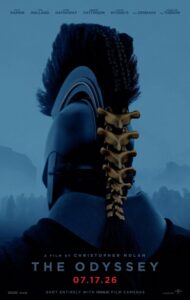 Editor’s Note: Dear Wife and I saw The Odyssey at the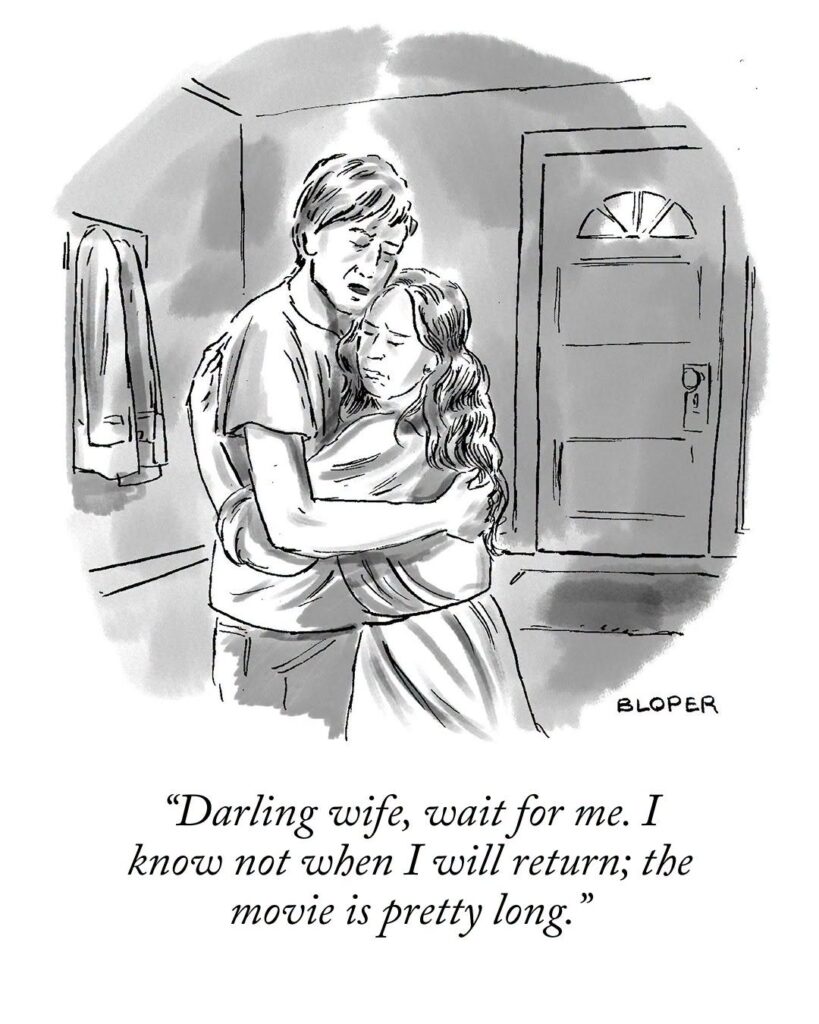
Dartmouth provost uses AI to do his homework
Aside from the debates as to whether AI models are out of control and could take over/destroy the world, there is the smaller, but still important, question as to how much disclosure is required by people using AI to create things under their own name.
As anyone who has been reading this blog over the last few months will know, I’m highly skeptical of any use of AI in writing or creative work (and lots of other places as well), and strongly opposed to undisclosed use of it for that purpose. I recognize that there are appropriate uses of these tools, and I will have a guest post next week dealing with this issue.
But for now I’d like to take another look at a prominent individual using AI to create work under his own name for both academic journals and opinion pieces for legacy media.
Semafor has been doing reporting on how AI is finding its way onto prominent editorial pages. Reed Albergotti, tech editor for Semafor, reports that most guest submissions to The Wall Street Journal, The Washington Post, and The New York Times are still being written by human beings. The publication found that of the 310 guest submissions, only 10 of them were labeled as being “at least 80% ‘AI’ by AI detector Pangram.” They went on to say that another 40 articles were partialy AI generated.
Semafor did their analysis after it was revealed that billionaire Stanley Druckenmiller had created a WSJ commentary primarily using AI. (You can read more about the Druckenmiller controversy here.)
Photo by Alesandra Gonzales for The Dartmouth
Among the most interesting of the AI composed articles is one credited to Dartmouth provost Santiago Schnell for the Washington Post, who reportedly used AI-generated commentary to argue that AI can be useful to students and teachers in certain circumstances, but that students should not use generative AI as a substitute for their own educational efforts. (I would note that after reading his commentary that it was utterly without any personal flavor to the writing, which is often a characteristic of AI-generated work. But it can also be a characteristic of empty rhetoric from university administrators…)
Semafor spoke with a representative of the Post who noted a policy that “requires guest writers to confirm their submission was ‘not created or manipulated with artificial intelligence or editing software,'” but the representative did not comment on any of the guest commentaries they had published that were primarily or partially created by AI.
Journalists at The Dartmouth student newspaper found that Schnell’s academic articles and opinion pieces published in 2026 had a “median ‘AI-written’ text percentage of 96%” by using the artificial intelligence detector Pangram. In contrast, Pangram found that all of Schnell’s written work from before 2022, when Chat GPT 4.5 was released, was found to be “100% human written.” (Why does this matter? AI detectors usually carry a warning that they are more likely to show “false positives” for AI with text written by people for whom English is a second language. Schnell’s first language is Spanish. But given that none of Schnell’s writings prior to the release of Chat GPT 4.5 in November of 2022 show any sign of being AI generated.
In an e-mail to The Dartmouth, Schnell said he used AI for:
“Language refinement, copyediting, improving clarity and organization and making writing processes more efficient,” but “review[s] the final text and take[s] responsibility for its content.”
“I develop ideas and arguments, conduct the research, evaluate the evidence and sources, determine the structure, prepare drafts and decide what appears in the final text,” Schnell wrote. “I regard these technologies as assistive tools. They do not identify the problem, design the research project, guarantee the validity of research results, interpretations, citations, conclusions or substitute for my research, intellectual judgment or authorship.”
Schnell’s Sept. 18 email statement to The Dartmouth was itself “100% AI-written,” according to a Pangram test.
The Dartmouth article explains in depth how Pangram is able to distinguish between AI used for composition and AI used for editing and “polish.” In short, Schnell is making the exact same arguments that students do when caught making illicit use of AI to complete their homework. The fact Schnell used AI to create his arguments about the appropriateness of using AI is just too on the nose.
Coming up next – A defense of using AI from an old friend of the blog.